
Knishes: From Street Carts to Deli Counters
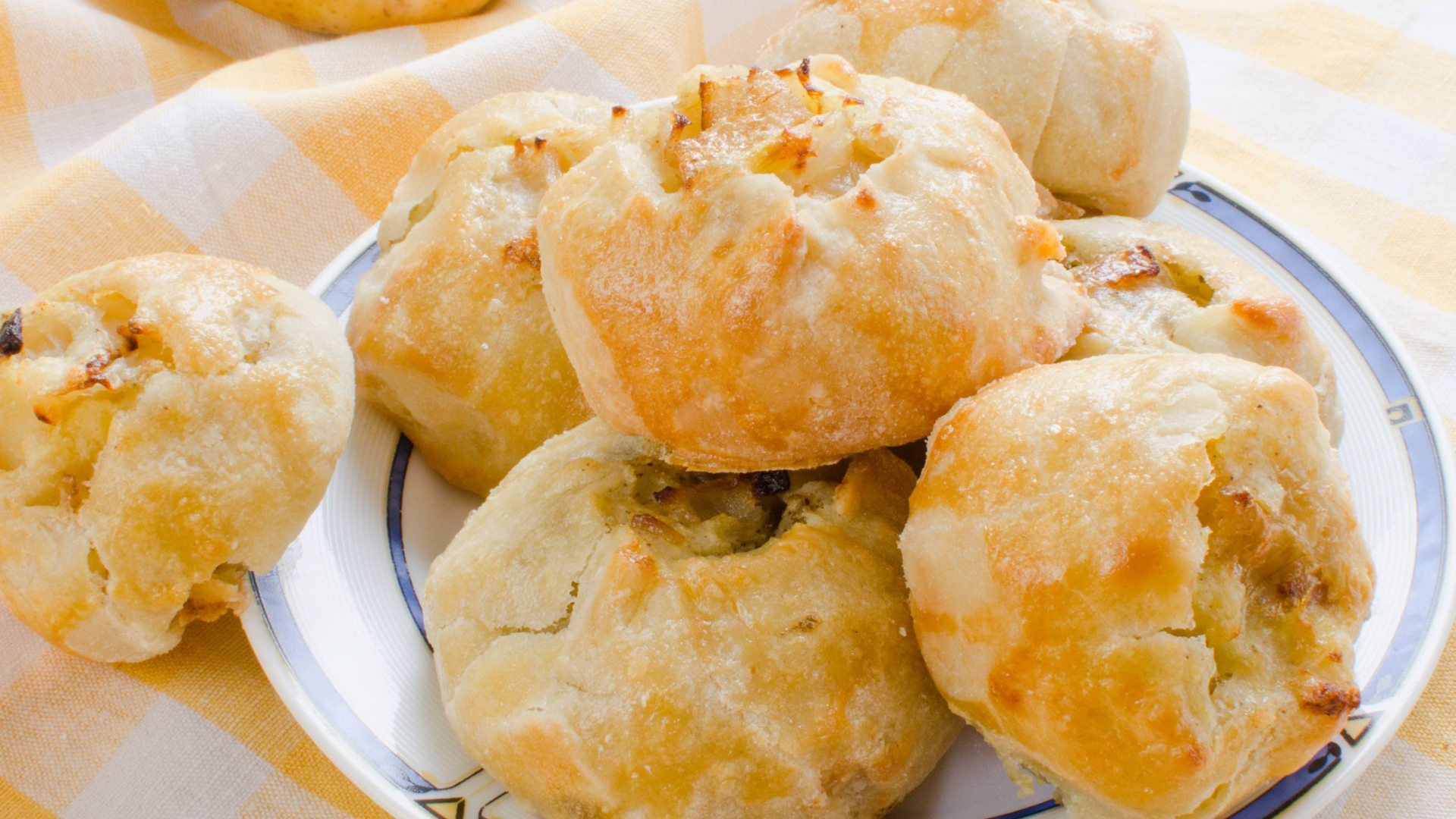
Some foods are fancy. Some foods are photogenic. And some foods are knishes.
A knish is not trying to be delicate. It is not trying to be trendy. It is a golden, dough-wrapped bundle of comfort, most famously filled with mashed potatoes, often served warm, and best enjoyed with a good smear of mustard. Simple? Yes. Boring? Absolutely not.
So, what is a knish? At its most basic, a knish is a savory Jewish pastry made by wrapping dough around a filling, then baking or frying it until the outside is golden and the inside is soft, hearty, and deeply satisfying. The classic version is filled with seasoned mashed potatoes, but over time, knishes have been made with kasha, meat, mushrooms, spinach, cheese, sweet potatoes, and just about anything else that tastes good tucked inside dough.
But the knish is more than a snack. It is a story. One that begins in Eastern Europe, travels across the Atlantic, lands on the Lower East Side of Manhattan, and somehow ends up at deli counters, street carts, bakeries, and family tables across America.
What Is a Knish?
A knish is usually described as a filled pastry, dumpling, or dough pocket, depending on who you ask and how opinionated they are about Jewish food. The most familiar knish is made with a thin dough wrapped around a savory potato filling. The filling is often mixed with onions, salt, pepper, and sometimes a little schmaltz or oil for richness.
From there, the knish can go in a few different directions. Some are round and baked, with a tender, slightly chewy crust. Others are square and fried, with a crispier exterior. Some are small enough to snack on while walking down the street, while others are big enough to make you reconsider whether you still need dinner.
The classic potato knish remains the star of the show. It is humble, filling, and exactly the kind of food that proves you do not need a long ingredient list to make something memorable. Flour, potatoes, onions, fat, salt, pepper. That is the basic magic trick.
And yes, mustard matters. A knish without mustard is still a knish, technically.
But a warm potato knish with some spicy brown? That is the full experience.
The Eastern European Roots of the Knish
Before the knish became a New York deli staple, it belonged to the food traditions of Eastern European Jews. Like many beloved Jewish foods, the knish came from a world where ingredients had to stretch, meals had to satisfy, and recipes were built around practicality as much as pleasure.
In Eastern Europe, dough-wrapped foods were common across many cultures. They were portable, filling, and easy to make with inexpensive ingredients. Potatoes, once they became widely available, were especially useful. They were affordable, hearty, and could be turned into everything from kugel to latkes to, of course, knishes.
The word “knish” is generally tied to Yiddish, with related words appearing in Ukrainian and Polish food traditions as well. That makes sense, because the knish, like so many foods with deep cultural roots, does not belong to a perfectly neat origin story. It developed through migration, adaptation, and everyday cooking. People made what they had, passed it down, and eventually brought it with them when they moved.
And when Jewish immigrants from Eastern Europe came to America, they brought the knish with them.
From Immigrant Food to New York Icon
In the late 19th and early 20th centuries, waves of Jewish immigrants arrived in New York, many settling on the Lower East Side. They brought languages, customs, religious traditions, family recipes, and a deep understanding of how to make a satisfying meal out of humble ingredients.
The knish fit perfectly into immigrant life. It was inexpensive. It was filling. It could be eaten by hand. It did not require a table, a plate, or even much time. In other words, it was the perfect street food before “street food” sounded like something you would plan a weekend around.
Pushcart vendors sold knishes to busy workers, families, and passersby. Bakeries and knisheries soon followed. The knish moved from home kitchens to sidewalks to storefronts, becoming part of the rhythm of Jewish New York.
One of the most famous names in knish history is Yonah Schimmel, whose Lower East Side knish bakery became a landmark. Shops like his helped turn the knish from an immigrant comfort food into a New York institution. It was not just something people ate because it was affordable. It became something people sought out because it tasted like home.
The Deli Counter Years
As Jewish communities spread beyond the Lower East Side, Jewish delis helped carry the knish into new neighborhoods and new generations. At the deli counter, the knish found good company alongside pastrami, corned beef, pickles, rye bread, matzo ball soup, and chopped liver.
It was no longer only a street cart snack. It became a side dish, an appetizer, a quick lunch, a nosh between meals, and the kind of thing your grandmother might insist you take “just one more” of before leaving.
The deli also helped introduce the knish to people outside of Jewish immigrant communities. Like the bagel, the knish became part of a broader American food vocabulary. You did not have to know its full history to appreciate it. You only had to take a bite.
Potato First, But Not Potato Only
While the potato knish gets top billing, it is not the only version worth knowing. Kasha knishes, filled with buckwheat groats, are another old-school favorite. Meat knishes bring a richer, more savory filling. Mushroom and onion knishes add an earthy sweetness. Spinach knishes offer a green, slightly lighter variation. Sweet cheese knishes lean into dessert territory.
Still, the potato knish remains the classic for a reason. It is simple in the best way. The filling is soft and savory, the dough adds just enough structure, and the whole thing feels like comfort food with a passport.
Why the Knish Still Matters
The knish has lasted because it does what great traditional foods do. It carries history without feeling stuck in the past. It can be nostalgic, but it is also practical. It can be eaten on the go, served at a meal, picked up from a deli, or made from scratch in a kitchen that smells like onions and warm dough.
It is also a reminder that some of the most iconic foods come from necessity. The knish was never designed to be glamorous. It was designed to feed people. To travel well. To satisfy. To make a little bit of potato feel like something special.
And maybe that is why people still love it. The knish does not need to be reinvented to be relevant. It just needs to be warm, golden, and filled with potatoes.
Preferably with mustard.
So, What Is a Knish?
A knish is a dough-wrapped Jewish pastry, most famously filled with mashed potatoes and baked or fried until golden. Historically, it is an Eastern European Jewish food that became a New York staple through immigrant communities, street carts, bakeries, and delis. Culinarily, it is comfort food at its finest: simple ingredients, big flavor, and a whole lot of history tucked inside.
Not bad for a potato in a pocket.





© 2025 by Kosher Eats. Website design and development by 1744 Marketing.
Accessibility | Terms & Conditions | Privacy Policy