
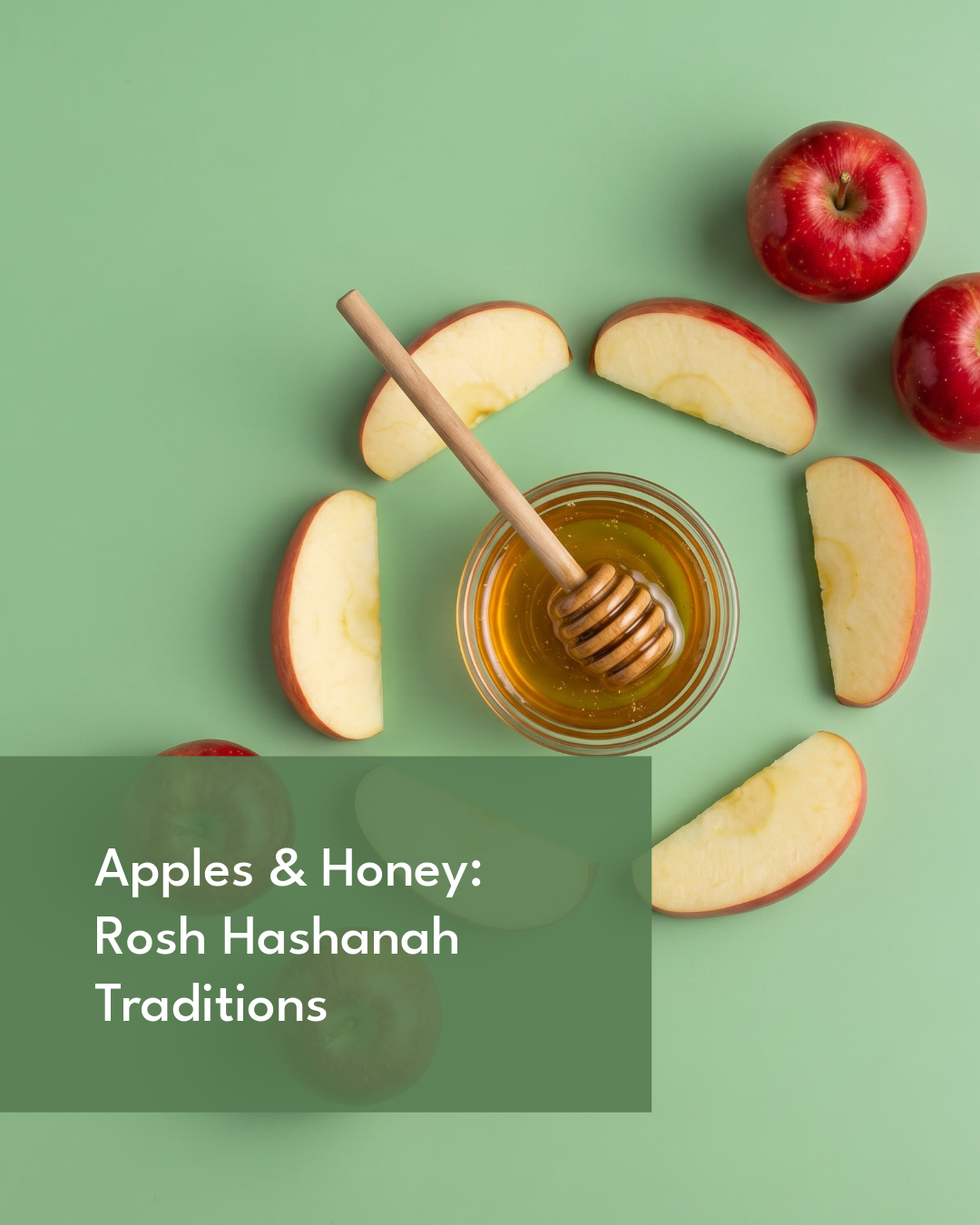
Apples & Honey: Rosh Hashanah Traditions
There are some food pairings that need no introduction. Peanut butter and jelly. Bagels and cream cheese. Cookies and milk.
And when Rosh Hashanah arrives, apples and honey.
The pairing may be simple, but it carries a message that has lasted for generations: May the year ahead be good, fruitful and, most importantly, sweet. It is one of the best-known Rosh Hashanah traditions, turning a hope for the future into something everyone at the table can see, share and taste.
Why Do We Eat Apples and Honey on Rosh Hashanah?
At the beginning of the Rosh Hashanah meal, many families dip a slice of apple into honey. Before eating, they recite the blessing for fruit grown on a tree, followed by a short prayer asking G-d to renew the coming year as a good and sweet one.
Honey is the easy part to understand.
It’s naturally sweet, making it a delicious symbol of the kindness, joy and blessing we hope the new year will bring.
There are also deeper interpretations. One compares the honeybee’s sting with the sweetness it produces, reflecting the hope that moments of difficulty or judgment can ultimately be transformed into something good. Honey has also been connected with the manna that sustained the Israelites in the desert, which the Torah describes as tasting like wafers made with honey.
The apple has layers of meaning, too.
Jewish texts and traditions have associated apples with blessing, beauty and the relationship between the Jewish people and G-d.
Together, the apple and honey create an edible wish, reminding us that the new year is a new chance to begin again with sweetness in mind.
A Table Filled With Meaning
Apples and honey may get top billing, but they are far from the only symbolic Rosh Hashanah food. Many families serve simanim, foods chosen because their names, shapes or qualities suggest a particular blessing for the year ahead.
Round challah is another familiar sight.
Instead of the braided loaf commonly served on Shabbat, Rosh Hashanah challah is often shaped into a circle, symbolizing continuity and the cycle of the year. Some versions include raisins for an extra touch of sweetness, and many families dip the challah in honey rather than salt.
Pomegranates are also popular. Their abundance of seeds represents the hope for a year filled with mitzvot, merits and good deeds.
Carrots often appear in tzimmes, a sweet stew especially common in Ashkenazi homes. The Yiddish word for carrots, meren, also means “to multiply,” making them a flavorful wish for growing blessings.
Other traditions may feature dates, leeks, beets, black-eyed peas, gourds or the head of a fish. Customs differ among communities and families, but the basic idea remains the same: the holiday table becomes a place to express hopes for prosperity, health, peace and a strong start to the year.
Rosh Hashanah Recipes for a Sweet New Year
Traditional Rosh Hashanah recipes tend to lean into sweetness, warmth and abundance. That does not mean every dish needs to be covered in honey, but this is probably not the holiday for a sad desk salad.
A festive menu might begin with round challah and apples and honey, followed by a bright pomegranate salad or roasted vegetables with dates. Carrots can become a classic tzimmes, a crisp apple-carrot slaw or a savory side dish with just enough sweetness.
A rice pilaf with leeks, dates, carrots and pomegranate seeds can bring several simanim together in one colorful dish.
For the main course, brisket and chicken are common choices in many homes, often paired with fruit-forward glazes or sauces. Honey-glazed salmon is another option that fits naturally into the theme.
Dessert is where the holiday’s sweet side really gets to shine. Honey cake, apple cake, apple crisp, baked apples and honey-pomegranate desserts all feel right at home on a Rosh Hashanah table.
There is plenty of room for creativity. A family recipe passed down for generations belongs beside the newest dish you spotted online and immediately decided had to be on the table.
Rosh Hashanah food is not about creating the “correct” menu. It’s about filling your meal with meaning, celebration and the flavors your family looks forward to all year.
Keeping Rosh Hashanah Traditions Personal
One of the most beautiful things about Rosh Hashanah traditions is how easily they can become personal.
As each person dips an apple into honey, invite them to share something they hope will feel sweeter in the coming year. Try a new fruit on the second night, another customary way to recognize the newness of the year. Add a symbolic food that reflects a goal your family shares. Or make room for a recipe that reminds everyone of someone special.
The traditions may be ancient, but they’re not frozen in time. Every family adds its own memories, flavors and familiar little moments.
Maybe it is the perfectly round challah. Maybe it is a honey cake that refuses to come out of the pan in one piece. Either way, it becomes part of the story.
As the new year begins, may your table be full, your apples be crisp and your honey pour without dripping all over the tablecloth.
Shanah tovah u’metukah!
For more kosher food inspiration, holiday traditions and plenty of delicious ideas, follow Kosher Eats on Instagram @koshereatsfl



© 2025 by Kosher Eats. Website design and development by 1744 Marketing.
Accessibility | Terms & Conditions | Privacy Policy