
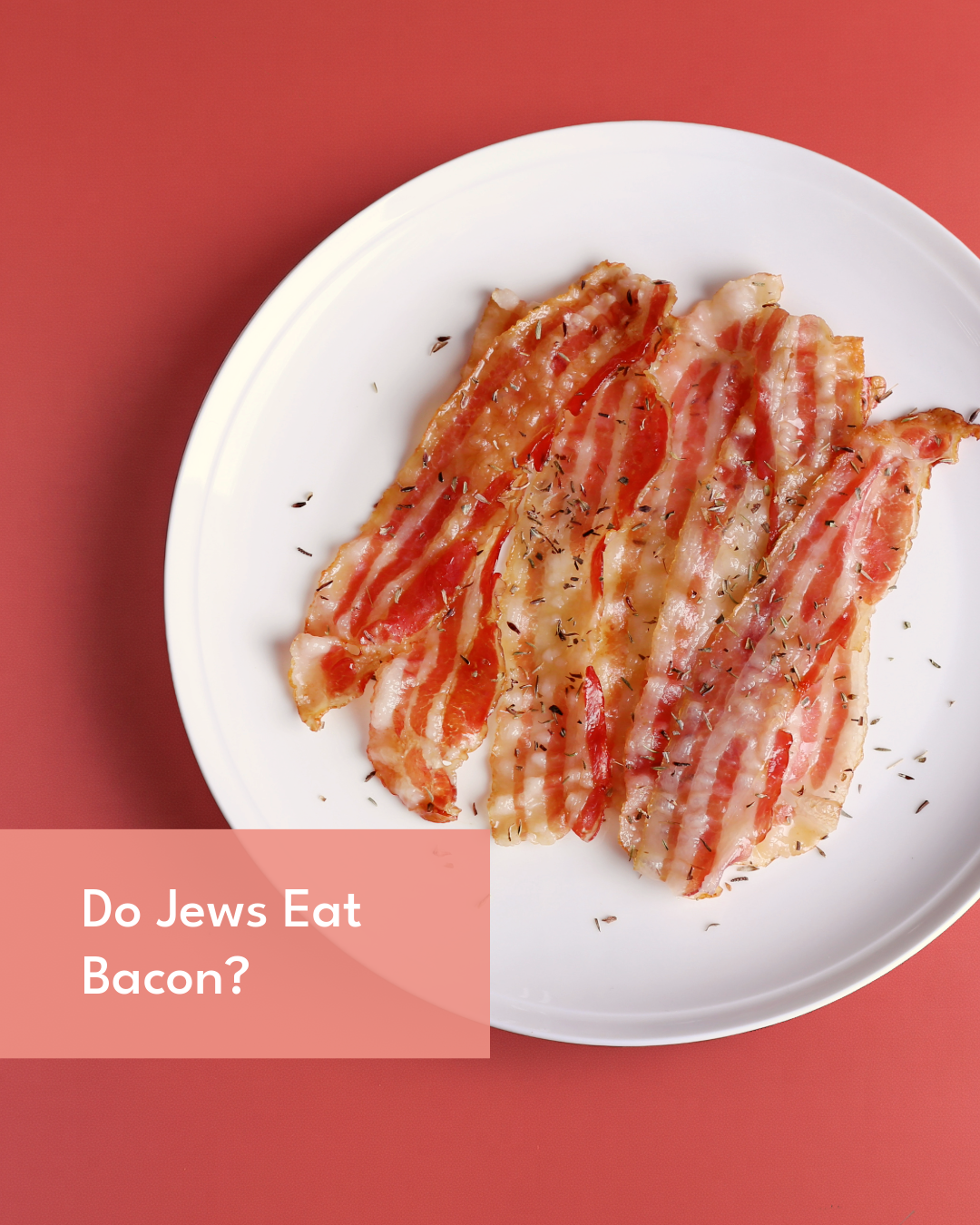
Do Jews Eat Bacon?
It is one of the most common food questions people ask about Jewish dietary law: do Jews eat bacon?
And, like many questions in the Jewish faith, the answer is varied. Some do, some don’t.
Jewish practice varies widely from person to person and family to family. Some Jewish people keep kosher strictly, some follow certain kosher-style habits, some avoid pork but do not keep fully kosher, and some do not follow kosher dietary laws at all.
But from the perspective of traditional kosher law, the answer is simple: pork bacon is not kosher.
For the Jewish-bacon-seekers, today there are kosher-friendly bacon alternatives made from beef, turkey, lamb, duck, or plant-based ingredients. So, strange as it may be to see the phrase “kosher bacon,” Jewish people have a chance to enjoy the salty, smoky, crispy experience.
Let’s break it down.
Is Bacon Kosher?
Traditional bacon is usually made from pork, most commonly pork belly. Since pork is not kosher, traditional bacon is not kosher.
In kosher dietary law, land animals must meet two requirements: they must have split hooves and chew their cud. Cows, sheep, and goats meet those requirements, which is why they can be kosher.
Pigs have split hooves, but they do not chew their cud. Because they only meet one of the two requirements, pigs are not kosher.
That means pork chops, ham, pork sausage, and pork bacon are all outside the boundaries of kosher eating.
So, Do Jews Eat Bacon?
This depends on the person.
Judaism is a religion, culture, identity, and peoplehood, and Jewish individuals relate to food traditions in many different ways. Some Jews keep kosher at home and outside the home. Some keep kosher only in certain settings. Some avoid pork and shellfish but do not follow all the details of kashrut. Others do eat bacon and other non-kosher foods.
So, it’s hard to make a blanket statement about every Jewish person. A better answer to the question is: Jews who keep kosher do not eat bacon.
Is there actually Kosher Bacon?
“Kosher bacon” is a funny phrase. Bacon is so associated with pork, that the existence of kosher bacon feels like a bit of an oxymoron.
But with the expansion of the kosher culinary market, people have started to make bacon-style products from kosher ingredients. Some options include:
- Kosher beef bacon
- Kosher turkey bacon
- Kosher lamb bacon
- Kosher duck bacon
- Vegetarian or plant-based bacon-style strips
- Bacon-flavored seasonings made without pork
The goal is usually to recreate some of what people associate with bacon: saltiness, smokiness, crisp edges, a savory flavor, and a little bit of indulgence. But the ingredient source is completely different.
What Is Kosher Beef Bacon?
Kosher beef bacon is one of the most common meat-based alternatives to pork bacon.
It is typically made from a cut of beef that can be cured, smoked, sliced, and cooked in a way that resembles bacon. Since beef comes from a kosher animal, it can be kosher if the animal is properly slaughtered, the meat is properly processed, and the product is made under kosher supervision.
Kosher beef bacon can be used in some of the same ways people use traditional bacon-style products: in sandwiches, on burgers, chopped into salads, served with eggs at a meat meal, or added to dishes for smoky flavor.
Of course, it will not taste exactly like pork bacon. Beef has its own deeper, meatier flavor. But when it is cured, smoked, and crisped, it can offer a similar savory experience while staying within kosher guidelines.
Is Turkey Bacon Kosher?
Turkey bacon can be kosher, but, as with many kosher products, it is not automatically kosher.
This is an important point. Just because something is made from turkey instead of pork does not mean it is kosher. For turkey bacon to be kosher, the turkey itself must be kosher, the processing must follow kosher law, the equipment and ingredients must be kosher-approved, and the final product should have reliable kosher certification.
In other words, “turkey” is not enough. “Certified kosher turkey bacon” is what a kosher consumer would look for.
The same principle applies to plant-based bacon alternatives. A vegetarian bacon-style strip may not contain meat at all, but kosher consumers would still look for certification because the ingredients, flavorings, production equipment, and facility all matter.
Why Make Bacon Alternatives at All?
For some people, the idea of kosher bacon sounds strange. If bacon is so closely associated with pork, why create a kosher version?
The answer is mostly culinary. Bacon has become a major flavor reference in American food culture. People use it to describe smoky, salty, crispy, savory foods. Kosher consumers may want those same textures and flavors without eating pork.
A kosher bacon alternative can make it possible to create a kosher version of a BLT-style sandwich, a smoky burger topping, a breakfast-style plate, or a savory salad add-in. It gives kosher cooks and diners more flexibility while still respecting kosher boundaries.
There is also a broader trend here.
The kosher food world has grown far beyond simple substitutions. Today, kosher consumers can find high-quality versions of foods that once felt unavailable, from charcuterie-style meats to plant-based alternatives, gourmet prepared foods, and creative comfort food.
Kosher bacon alternatives are part of that larger shift: more options, more creativity, same kosher framework.
Does Calling It “Bacon” Make It Not Kosher?
Some people are uncomfortable with the term “kosher bacon” because bacon is so strongly associated with pork. Others see it as a useful shorthand for the style of the product.
In practice, the key issue is clarity. A kosher product should not mislead people into thinking pork bacon can be kosher. That is why many products use language like “beef bacon,” “turkey bacon,” “imitation bacon,” or “bacon-style strips.”
The name describes the culinary style, not the original pork product.
Think of it like veggie burgers.
A veggie burger is not a beef burger, but the word “burger” helps people understand the shape, use, and eating experience. Kosher bacon works in a similar way. It tells you what the product is trying to imitate, while the label should make clear what it is actually made from.
So, do Jews eat bacon?
Some Jewish people do. But Jews who keep kosher do not eat pork bacon, because pork is not kosher.
Bacon may be off the kosher menu, but bacon-style creativity is very much alive.





© 2025 by Kosher Eats. Website design and development by 1744 Marketing.
Accessibility | Terms & Conditions | Privacy Policy